
Safeguarding
Safeguarding is building and holding an awareness that the life of many children (and their families) is difficult; recognising signs and indicators of abuse and neglect and truly listening for these concerns; knowing what to do, and making sure child protection procedures are followed; and always keeping the child’s welfare at the centre of everything they learn and everything they do, from breakfast clubs to preparing for exams.
Duke’s Aldridge Academy is a community and all those directly connected (staff, governors, parents, families and children/learners) have an essential role to play in making it safe and secure. Duke’s Aldridge Academy recognises our moral and statutory responsibility to safeguard and promote the welfare of all children with their best interests at the centre of our work.
Duke’s Aldridge Academy recognises the importance of providing an ethos and environment within school/educational setting that will help pupils/students/learners/apprentices to feel safe, secure and respected; encourage them to talk openly; and enable them to feel confident that they will be listened to. We are alert to the signs of abuse and neglect and follow our procedures to ensure that pupils/learners receive effective support, protection and justice.
We believe that to effectively safeguard children, we must ensure that parents are kept up to date and fully informed on safeguarding risks and provided with a range of strategies. You can find Safeguarding Information for parent’s here.
Please see below further guidance on key areas, which are also included in the child protection and safeguarding policy.
Child Sexual Exploitation

Child sexual exploitation involves situations, contexts or relationships in which a person under 18 is given something, such as food, accommodation, drugs, alcohol, cigarettes, affection, gifts or money in return for performing sexual activities or having sexual activities performed on them. It can also involve violence, coercion and intimidation, with threats of physical harm or humiliation.
At Dukes our RSE Curriculum plays an important role in helping our students gain an understanding of healthy and unhealthy relationships and harmful sexual behaviours. As a school, we want our Dukes students and families to be able to turn to us and practitioners for help and support from abuse and exploitation.
Support Services:
Government Advice and Support for Victims of Child Sexual Exploitation
Haringey Safeguarding Children Partnership
Ivison Trust – Child and Parent Support
The Lighthouse London – Support for children in Barnet, Camden, Enfield, Haringey and Islington
E-Safety and Cyber Bullying
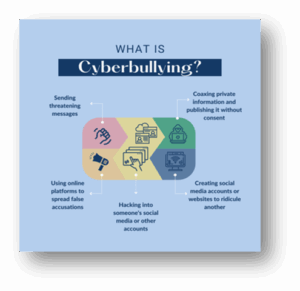
At Dukes our students have the use of technology as part of their learning. Keeping children safe online involves training on how to keep themselves safe in the ever-involving digital world. This includes tackling bullying (including cyberbullying), teaching them to have an awareness of online safety, and ensuring they don’t access inappropriate material, which can put them in danger of harm.
Cyberbullying is bullying with the use of digital technologies. It can take place on social media, messaging platforms, gaming platforms and mobile phones. It is repeated behaviour, aimed at scaring, angering or shaming those who are targeted. Examples include:
- Spreading lies about or posting embarrassing photos or videos of someone on social media
- Sending hurtful, abusive or threatening messages, images or videos via messaging platforms
- Impersonating someone and sending mean messages to others on their behalf or through fake accounts.
Face-to-face bullying and cyberbullying can often happen alongside each other. But cyberbullying leaves a digital footprint – a record that can prove useful and provide evidence to help stop the abuse.
Support Services:
National Bullying Helpline – Cyber Bullying Information and Advice
Childnet – Online Bullying Support and Information
Shout – 24/7 Confidential Bullying Support Via Text
NSPCC – Keeping Children Safe Online
Aldridge Education E-Safety for Parents
National Cyber Security Centre – Top Tips for Staying Secure Online
Sexting (sharing of nudes and semi-nudes)
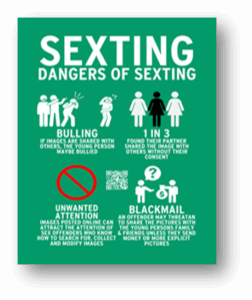
Sexting is when someone shares sexual, naked or semi-naked images or videos of themselves or others, or sends sexually explicit messages. They can be sent using mobiles, tablets, smartphones, laptops – any device that allows you to share media and messages. Most young people today spent a lot of time on the online world and are comfortable with sharing their entire lives online. Young people can see sexting as risk-free and harmless but there are different types of risks which can be associated with sexting.
- It may cause emotional distress. The sharing of inappropriate content can lead to negative comments and bullying, which can be very upsetting.
- It could affect your child’s reputation. Explicit content can spread very quickly over the internet and affect your child’s reputation.
- Sexting is illegal (for under-18s)
At Dukes we believe that parent and child relationship is paramount to the safety of our students. Communication is the key and if you have any concerns about the safety of your child you should talk to someone about this.
Support Services:
Childline – Guidance and Advice on Sexting and Nudes
NSPCC – Safeguarding Against Sexting and Sharing of Nudes
Harmful Sexual Behaviour
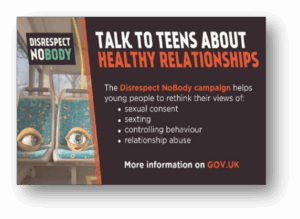
The term ‘harmful sexual behaviour’ describes a continuum of behaviours displayed by children and young people under 18, ranging from those considered ‘inappropriate’ at a particular age or developmental stage to ‘problematic’, ‘abusive’ and ‘violent’ behaviours.
There are no accurate prevalence figures on the full spectrum of harmful sexual behaviours. However, available data suggests that under-18s are responsible for a significant proportion of child sexual abuse, and there is considerable concern about widespread and ‘normalised’ sexual harassment and abuse between students in schools. Child-on-child sexual abuse is a form of HSB where sexual abuse takes place between children of a similar age or stage of development. Child-on-child sexual abuse is a form of HSB that takes place between children of any age or stage of development
At Dukes we understand that harmful sexual behaviour is developmentally inappropriate sexual behaviour displayed by children and young people which is harmful or abusive. We take this very seriously by making sure that students are given the care and support needed to be able to manage the impact caused by harmful sexual behaviours.
Problematic sexual behaviour (PSB) is developmentally inappropriate or socially unexpected sexualised behaviour which doesn’t have an overt element of victimisation or abuse.
Support Services:
Lucy Faithfull Foundation – Resources and Free Anonymous Live Chat
NSPCC – Information, Resources and Podcasts
Child Sexual Abuse Centre – Harmful Sexual Behaviours Resources
Teen Vaping
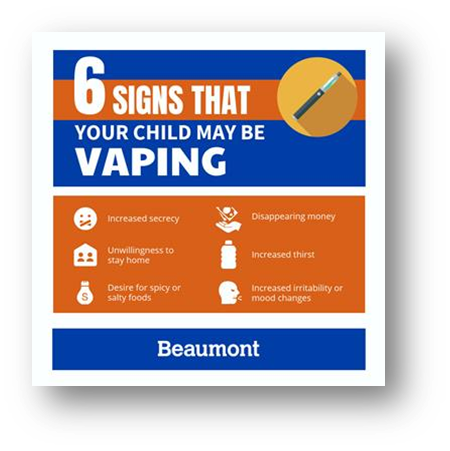
Vaping has gotten much more popular among teenagers in the past few years. Now, many more teenagers use e-cigarettes, like the brand JUUL, than traditional cigarettes. There are restrictions on the sale and advertising of e-cigarettes to young people, but many teenagers still use them.
When teens vape, what they’re doing is inhaling steam that comes from hot nicotine liquid. E-cigarettes, vape pens and JUULs are all different devices for heating the liquid. Research shows that vaping has many medical risks.
E-cigarettes contain a lot of nicotine, which is very addictive. Getting addicted to nicotine can make it harder for teenagers to focus and concentrate. E-cigarettes also contain chemicals that could cause cancer, and there are many reports of serious lung problems connected to vaping. Additionally, vaping can make teenagers more likely to start smoking regular cigarettes.
At Dukes we believe the use of e-cigarettes is unsafe for our students and young adults. Nicotine is highly addictive and can harm adolescent brain development, which continues into the early to mid-20s. Dukes staffs are fully aware of the risk associated with E-cigarettes and are being vigilant in trying to eliminate this problem monitoring the student’s behaviours.
British Values

For schools in the UK, British values refers to a set of values that the government believes are important for children to learn. At Dukes we believe in the respect for the rule of law, individual liberty, democracy, and mutual respect for and tolerance of different faiths and beliefs. Dukes promotes these values in schools, which is part of the government’s efforts to create a more cohesive and integrated society, as well as a way to protect children from extremist ideologies.
The promotion of British values began after the terrorist attacks in London in 2005. After the attacks, the government introduced a number of policies and initiatives aimed at promoting British values in schools, including the PREVENT program, designed to prevent radicalisation and extremism.
At Dukes everyone is treated equally and fairly, and everyone follows the same rules and laws. This value promotes a sense of order and stability in our society, and helps to prevent crime and other harmful behaviours within our community.
Domestic Abuse
If you’re worried about violence or abuse from your partner, ex-partner or a member of your family, you can get help and advice. If you’re in immediate danger, you should always phone the police on 999.
Domestic Abuse Support Services:
Domestic & Sexual Violence Support
Children and Young People affected by Abuse
Prevent: Radicalisation and Extremism
There’s a chance that your child may meet people online or visit websites that could lead them to adopting extreme views or experiencing radicalisation. Curiosity could lead your child to seek out these people, or they could groom your child. They could then encourage your child to adopt beliefs or persuade them to join groups with extreme views and actions. To protect your child from radicalisation or to learn how young people might be targeted, navigate our advice hub. Explore expert tips on how to prevent radicalisation and where you can go for further support.
The Prevent Education Officer for Haringey Council is:
Tishya Desai
M: 07976070722
Support Services:
Protect children from radicalisation
Mental Health
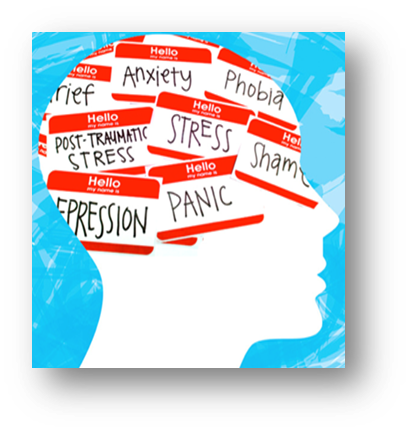
Mental health includes our emotional, psychological, and social well-being. It affects how we think, feel, and act. It also helps determine how we handle stress, relate to others, and make healthy choices.1 Mental health is important at every stage of life, from childhood and adolescence through adulthood.
Mental Health Support Services:
Kooth: Online mental health advice and support 24/7
CAMHS: CAMHS – Barnet, Enfield and Haringey
Barnet, Enfield and Haringey: beh-mht.nhs.uk
Mind in Haringey: Mindinharingey
Young Minds: Mental Health advice for parents
Let’s Talk IAPT: IAPT
Mental Health Resource Hub: Haringey Mental Health Hub
Haringey Trailblazers: behcamhs.nhs.uk
Sexual Harassment and Abuse
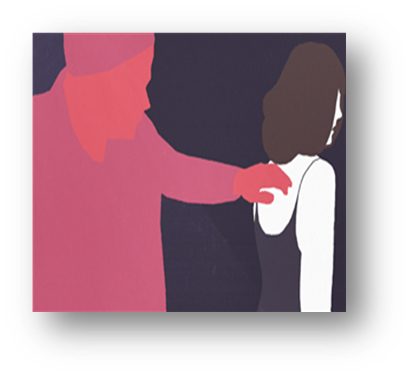
Sexual harassment is a type of harassment involving the use of explicit or implicit sexual overtones, including the unwelcome and inappropriate promises of rewards in exchange for sexual favours. Sexual harassment includes a range of actions from verbal transgressions to sexual abuse or assault
Support Services:
Protecting young people from online sexual abuse
Protecting children from sexual abuse and exploitation
How can I protect my child from sexual assault
Talking to your child about online pornography
Specialist helpline and other support: Sexual harassment
Sexual harassment – Victim Support
Bullying
Bullying is behaviour that hurts someone else. It includes name calling, hitting, pushing, spreading rumours, threatening or undermining someone. It can happen anywhere – at school, at home or online. It’s usually repeated over a long period of time and can hurt a child both physically and emotionally.
Information about Bullying:
Information and advice for anyone dealing with Bullying
Bullying- Parents Guide to Support
Gangs

An association of three or more individuals; Whose members collectively identify themselves by adopting a group identity, which they use to create an atmosphere of fear or intimidation, frequently by employing one or more of the following: a common name, slogan, identifying sign, symbol, tattoo or other physical marking, style or colour of clothing, hairstyle, hand sign or graffiti; Whose purpose in part is to engage in criminal activity and which uses violence or intimidation to further its criminal objectives.
Support Services:
Criminal exploitation and gangs
Help and Support to Young people involved in gang culture
FGM
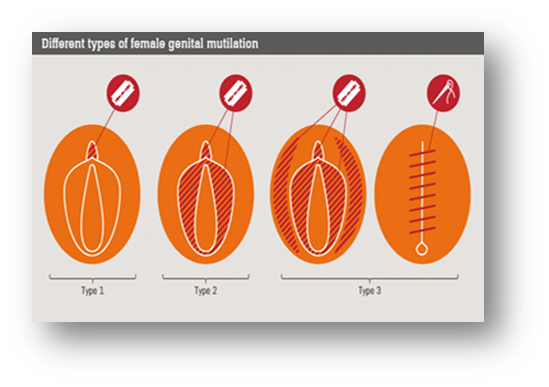
Female genital mutilation (FGM) comprises all procedures that involve partial or total removal of the external female genitalia, or other injury to the female genital organs for non-medical reasons. The practice has no health benefits for girls and women and cause severe bleeding and problems urinating, and later cysts, infections, as well as complications in childbirth and increased risk of new-born deaths.
Support Services:
Female Genital Mutilation | Haringey Foster Carer Handbook
We’ve got advice to help you keep children and young people safe.
FGM: Organisations offering advice and support
Female genital mutilation: help and advice
Forced Marriage/Honour based killing

A forced marriage is where one or both people do not (or in cases of people with learning disabilities or reduced capacity, cannot) consent to the marriage as they are pressurised, or abuse is used, to force them to do so. It is recognised in the UK as a form of domestic or child abuse and a serious abuse of human rights. The criminal offence of forced marriage includes taking someone overseas to force them to marry (whether or not the marriage takes place) or marrying someone who lacks the mental capacity to consent to the marriage (whether or not they are pressurised).
Support Services:
County Lines

County lines is a term used to describe gangs and organised criminal networks involved in exporting illegal drugs using dedicated mobile phone lines or other form of “deal line”. This activity can happen locally as well as across the UK – no specified distance of travel is required. Children and vulnerable adults are exploited to move, store and sell drugs and money. Offenders will often use coercion, intimidation, violence (including sexual violence) and weapons to ensure compliance of victims
Support Services:
Parent webinars – county lines and criminal exploitation
New support for victims of county lines exploitation
New county lines support service will offer lifeline across England and Wales
County Lines: Protecting Our Communities and Families
Catch22 to provide support for victims of County Lines exploitation
Other Information
Rethink Mental Illness (external link)
Tel: 01823 365 308
Group open to Carers and people with mental illness. First Thursday of every quarter from 7pm.
Suffolk House, 451 Green Lanes, N13 4BS
HAGA Families Services (external link)
Tel: 020 8801 3999
Offers advice and support, one-to-one appointments and group sessions for family and friends affected by drug and alcohol use. They offer a Family, Friends and Carers Saturday support group online.
Markfield Project (external link)
Tel: 020 8800 4134
Inclusive services and support groups for disabled and non-disabled children, young people, adults and their families.
- Transition and Adulthood Carer Support Group, Fridays 10am-12 noon during a 10-week term
- Parent Carer Support Group, Fridays 10am-12 noon during a 12-week term
Carers First offers a range of support including the following:
- Providing information, advice and guidance specific to you as a carer and individual
- Supporting you with conversations with people including GPs, social services and hospitals
- Offering opportunities to access practical training to help you with your caring role, eg first aid training | workshops
- Providing access to talk to other carers and share peer support through their Carers First Facebook Community (external link)
- Supporting you to maximise you household income by assisting with checking your eligibility for benefits (external link)and financial support (external link)
- Providing opportunities to attend support groups and activities where you can meet others in a similar situation to yourself
- Staying in regular contact through our Carers Hub phone line, website, monthly e-bulletins and regular “What’s On” guides
- Providing opportunities for carers to become involved in helping develop and improve services for carers
Carers First provide a dedicated telephone support service through their Carers Hub. Someone is available to take your call from:
- Monday to Thursday, 9am-5pm
- Friday, 9am-4.30pm
Carers can call the hub to register at any time or ask questions about their caring role.
Please contact the Carers Hub on 0300 303 1555 for further information or you can email info@carersfirst.org.uk or visit the Carers First website:
- Carers First website – Haringey information (external link)
- Carers First website – main website (external link)
Support for children when a parent has cancer | Help & Support
Cancer Care Map: https://www.cancercaremap.org › article › support-for…